Some subjects are hard to teach from a page: the structure of matter, the inner workings of a cell,
thousands of years of landscape history, the feedback loops that drive complex systems.
These augmented- and virtual-reality apps bring them into the student’s own space, where they can be
explored from every angle instead of only read about.
Build atoms from the fundamental particles up
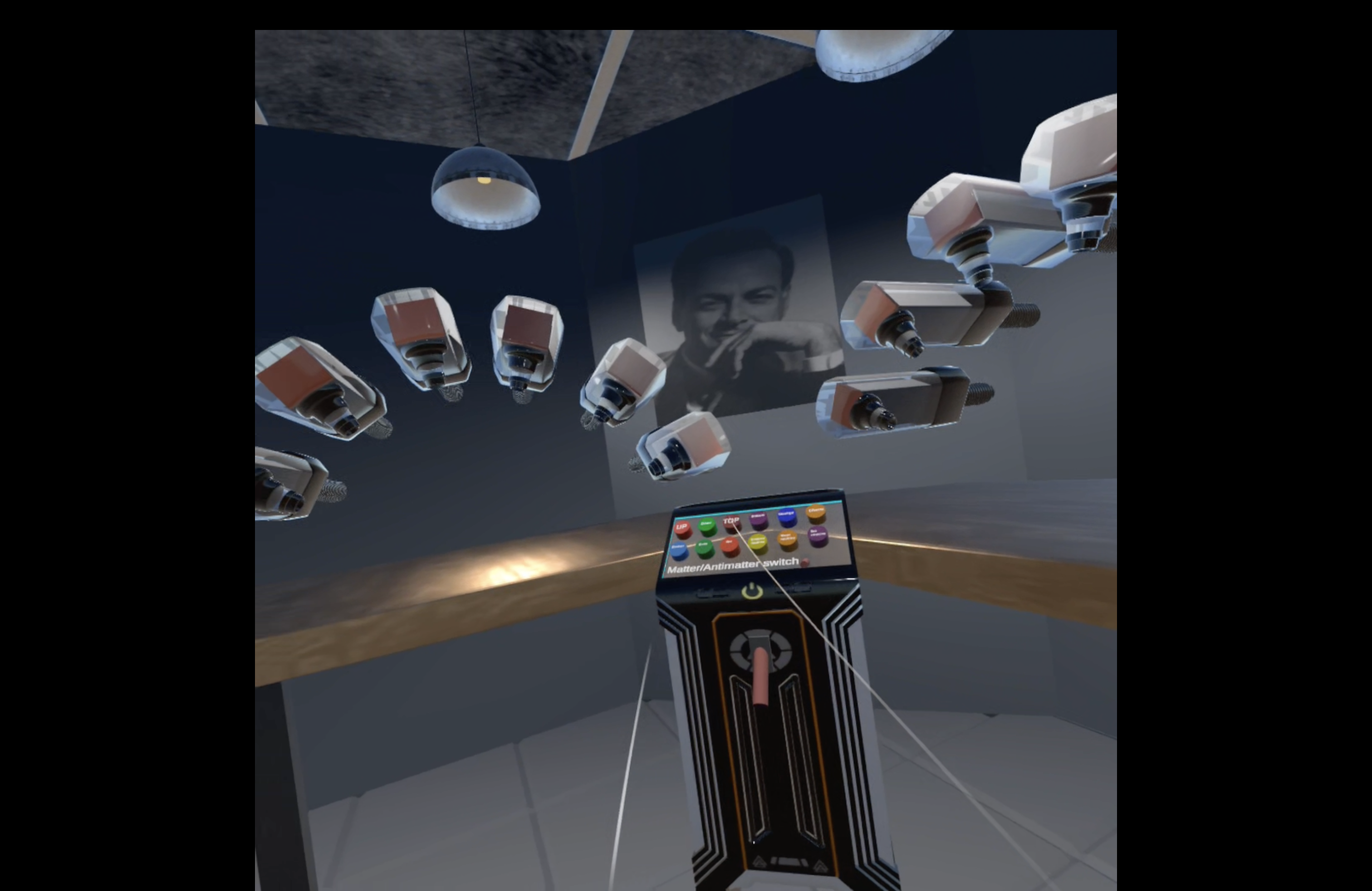
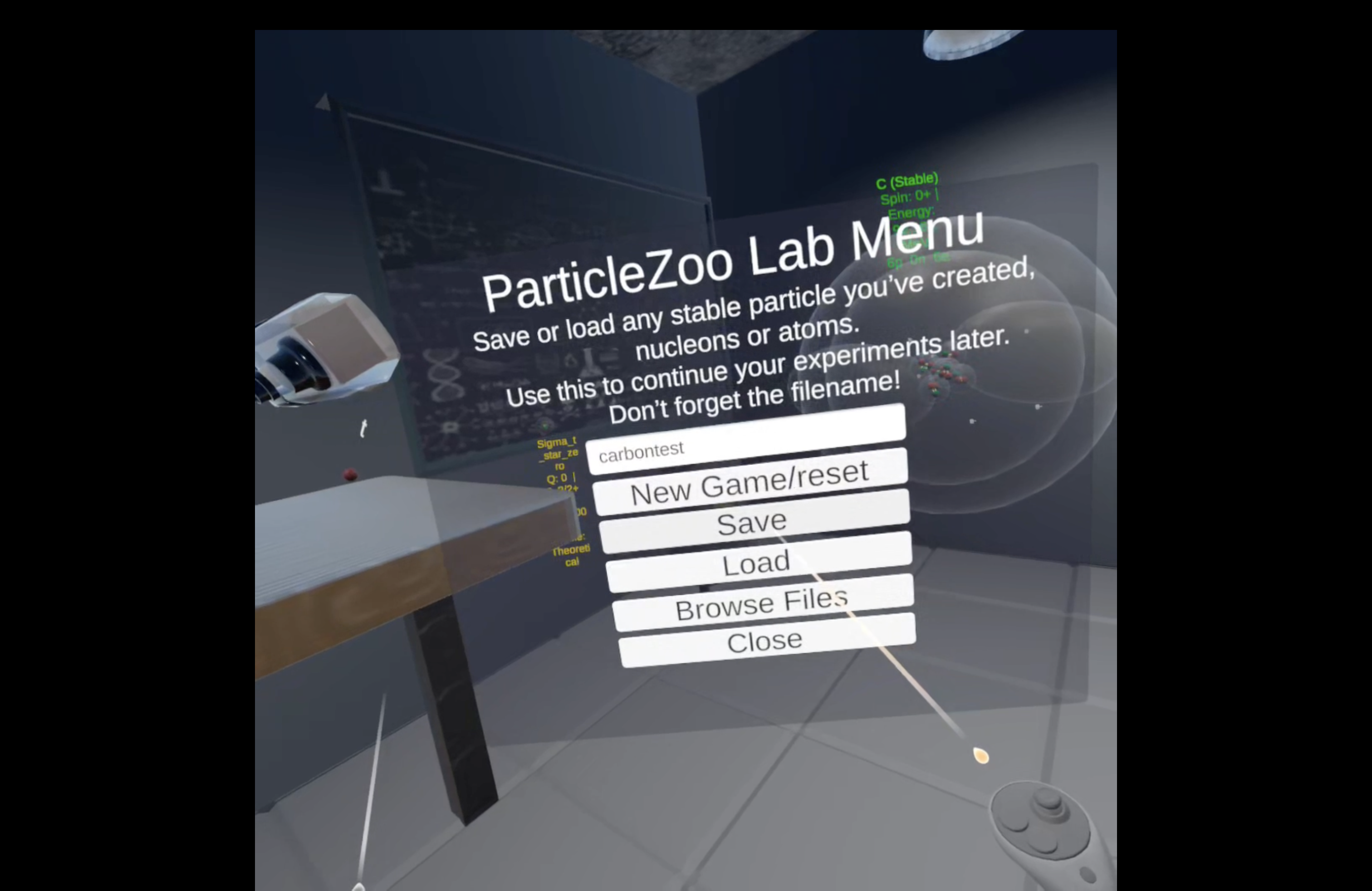
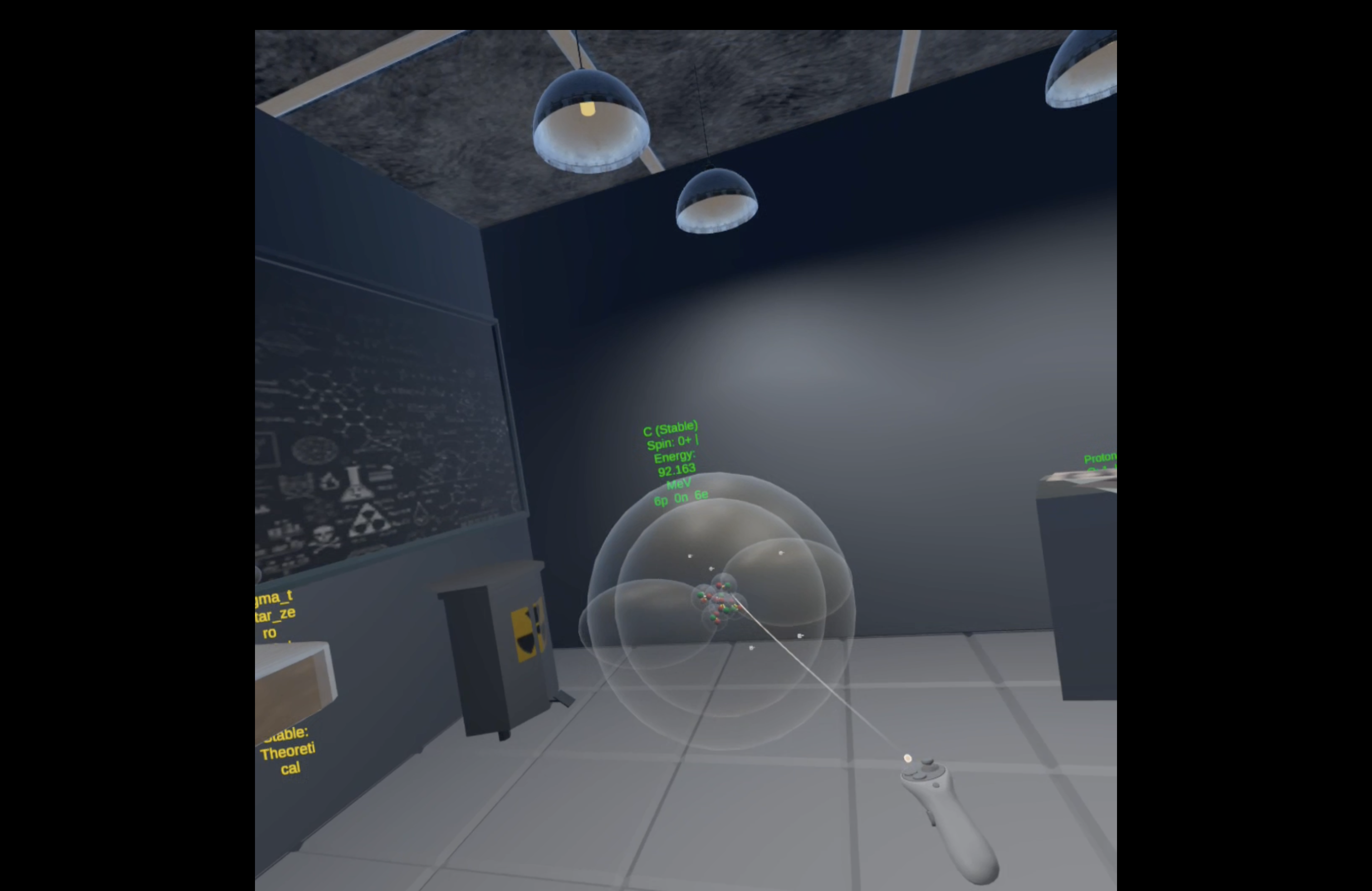
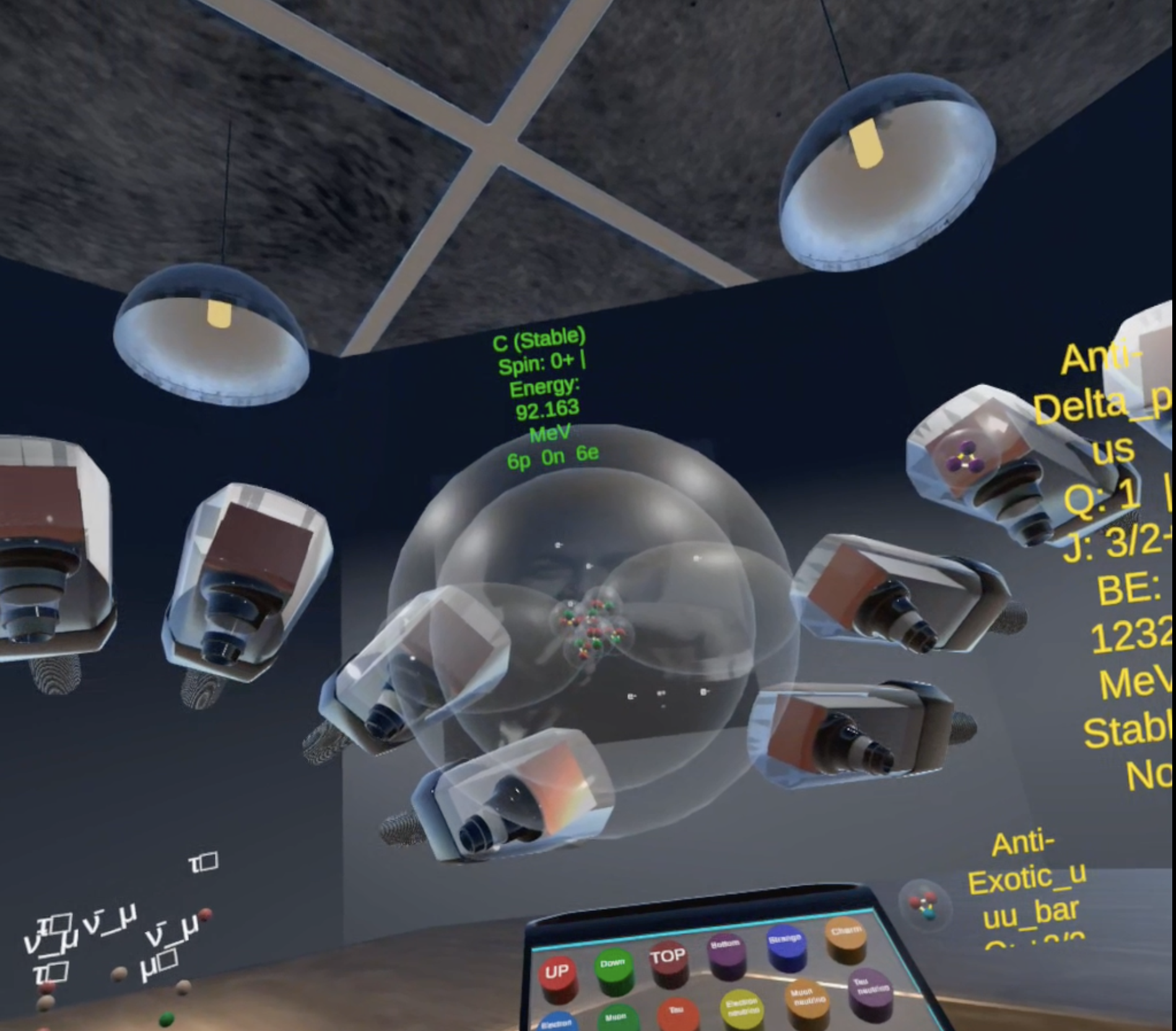
A virtual-reality game in which players assemble atoms piece by piece from the fundamental building
blocks of particle physics. Hands-on construction turns abstract ideas about the structure of matter
into something students can see, handle, and remember.
Demo
Download
Screenshots
The valley’s nature and society, from the Ice Age to the 20th century
An immersive journey through the history of the Shenandoah Valley, JMU’s home. The app reconstructs
the valley’s landscapes, ecosystems, and human communities across more than ten thousand years, from the
last Ice Age to the twentieth century. Students watch the land, its wildlife, and the people who lived here
change era by era, and see how nature and society shaped each other along the way.
A working cell with live biochemical reactions
Virtual Bio places a functioning cell in the room with the student. Instead of a static textbook diagram,
the cell is alive with activity: biochemical reactions unfold as students watch, and the cell can be explored
from any angle to see where each process takes place and how the parts work together to keep it running.
System modeling in three dimensions
System dynamics models — stocks, flows, and feedback loops — are usually drawn as flat diagrams.
AR System Dynamics lifts them into three dimensions, so students can watch quantities accumulate and drain
and see feedback loops drive growth, decline, or balance. The result is an engaging, intuitive feel for how
complex systems behave over time.